 Full Catalog PDF

Key Takeaways:
- Pooling water in your yard is almost always a drainage problem, a grading problem, or both. Most cases are fixable without major excavation.
-
The right fix depends on where the water is coming from and where it needs to go. Start with diagnosis before reaching for a solution.
-
Yard grading, dry wells, and trench drains each solve different parts of the problem and often work best together.
-
Water that pools in your yard long enough can eventually find its way toward your foundation. Fixing it early is always cheaper than fixing it late.
A yard that holds water after every rain can turn into a homeowner nightmare. It kills grass, attracts mosquitoes, limits how you can use the space, and puts your foundation at risk over time. The good news is that most yard drainage problems follow a predictable pattern, and the solutions are well within reach for most homeowners. This guide walks through how to identify what’s causing the pooling and how to fix it based on what you find.
Figure Out Where the Water Is Coming From
Before choosing a fix, spend a few minutes figuring out what’s actually causing the problem. Yard pooling usually comes from one of three sources:
1. Rain landing on the yard itself
If your soil is compacted or clay-heavy, water sits on the surface because it can’t absorb fast enough. The soil fills up before the water has anywhere to go.
2. Runoff from neighboring surfaces
Roofs, driveways, and adjacent properties shed water that ends up in your yard. Downspouts are a common culprit. A standard downspout deposits a concentrated volume of roof runoff in one spot, often faster than the surrounding soil can absorb it.
3. Grading that directs water toward low points
Water follows gravity. If your yard has low spots from settling soil, poor original grading, or years of foot traffic, water collects there after every rain regardless of how well the rest of the yard drains.
How Yard Grading Fixes the Root Cause of Pooling Water
If your yard slopes toward a low spot rather than away from it, regrading is often the most effective long-term fix. This addresses where the water goes before it pools, rather than dealing with it after.
The goal is a consistent slope away from any structures and toward a suitable outlet—the street, a storm drain connection, or a low area of the property well away from anything that can be damaged. A drop of about one inch per foot is enough to keep water moving across most residential lawns without creating erosion.
Regrading with compactable fill raises low areas and establishes the correct slope. For most yards, this is a manageable project without heavy equipment. Top the fill with topsoil and reseed, and the surface sheds water consistently rather than collecting it.
One thing to check during this process: the grade immediately around your foundation. The ground should slope away from the house at a minimum of one inch per foot for the first six feet. If it’s flat or sloping toward the house, water is working against your foundation every time it rains.
When a Dry Well Is the Right Fix
Regrading moves water across the surface. A dry well moves it underground.
If your yard has a persistent low spot where water consistently collects (and regrading toward a useful outlet isn’t practical) a dry well gives that water somewhere to go beneath the surface. It collects excess runoff and disperses it gradually into the soil below the saturated upper layer, keeping the surface dry without piping water to a remote discharge point.
Vodaland's Easy Stormwater DryWell is built from UV-resistant polypropylene, lightweight enough to install without heavy machinery, and modular enough to scale to the volume your yard actually deals with. It connects cleanly to catch basins and downspout extensions, making it a natural addition to a broader yard drainage plan rather than a standalone fix.
A dry well works best when the surrounding soil can absorb water at a reasonable rate. Clay-heavy soil drains slowly. If water doesn’t percolate through the ground within a day or so after rain, a dry well will fill faster than it empties and you’ll need a piped outlet system instead.
When a Trench Drain and Outlet Is the Right Fix
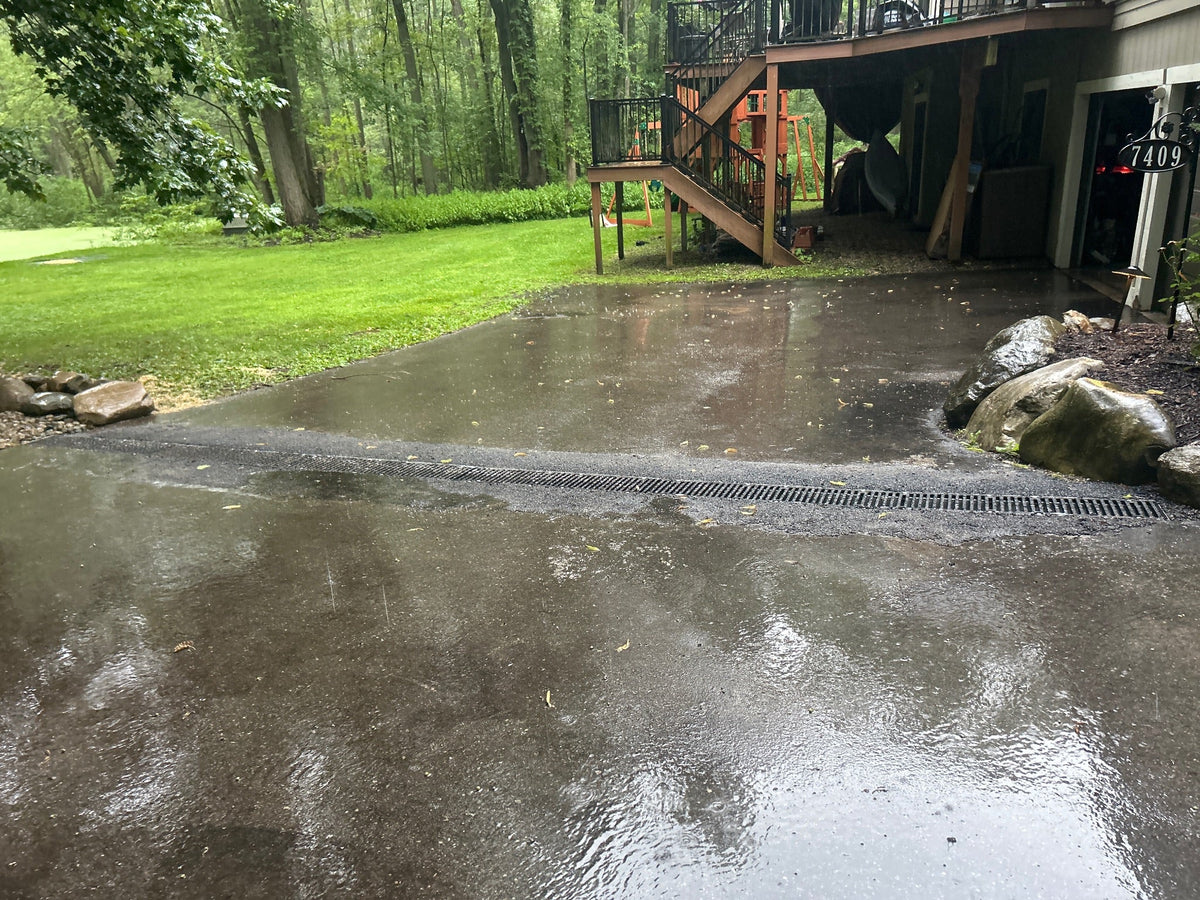
For yards where the volume or velocity of runoff is too high for a dry well to keep up with, a trench drain channels water across the surface and routes it to a proper outlet.
A trench drain installed at the low point of the yard intercepts water before it pools and moves it through a connected pipe to a discharge point. That outlet might be a storm drain connection at the street, a daylight outlet at the property edge, or a dry well if the volume is manageable.
This approach handles higher water volumes than a dry well alone and works well for yards where sheet flow from a driveway, neighboring property, or sloped grade is contributing to the pooling problem. It also pairs naturally with a catch basin at specific collection points: downspout termination zones, the base of a slope, or any spot where water concentrates before it spreads across the yard.
The key is planning the full water path before installation. A trench drain that collects water efficiently but doesn’t have a clear, properly sloped outlet route just relocates the pooling problem rather than solving it.
Combining Fixes for Stubborn Pooling
Most yard drainage problems benefit from more than one solution working together. A typical approach might look like this:
- Regrade the yard to establish proper slope away from the house and toward the yard’s low area.
-
Install a trench drain or catch basin at the low point to intercept concentrated runoff.
-
Connect that to a dry well if a piped outlet isn’t practical, or run an outlet pipe to the street or property edge if volume is high.
Each piece handles a different part of the problem: the grade controls where water moves, the drain captures it where it collects, and the outlet or dry well moves it off the property or underground. Together, they address the full water path rather than just one point in it.
The Longer You Wait, the Bigger the Problem Gets
Yard pooling rarely improves on its own. Low spots get lower as soil erodes. Saturated soil absorbs less over time. And water that pools close to the house finds paths toward the foundation and shows up as damp walls, efflorescence, or cracks months or seasons later.
The fixes exist at every budget level, from a weekend regrading project to a catch basin and dry well installation that takes an afternoon. Starting with a clear diagnosis of where the water is coming from makes the right solution obvious. And fixing it now is almost always simpler and less expensive than dealing with what it becomes if left alone.

Leave a comment
This site is protected by hCaptcha and the hCaptcha Privacy Policy and Terms of Service apply.