 Full Catalog PDF

Key Takeaways:
- Water pooling near your foundation is a structural risk that compounds over time
- Extending downspouts and correcting soil grade can eliminate pooling without any major excavation.
- Damp basement walls and soil erosion near the foundation are early warning signs
- When surface fixes aren't enough, a properly specified drainage system intercepts water before it reaches your foundation. Persistent pooling that survives basic fixes usually signals that water needs somewhere to go underground.
Of all the places water can collect on your property, near your foundation is the worst. What starts as a nuisance drainage issue can quietly become a structural one, and the repair costs scale up fast. The good news is that most foundation water problems are preventable, and many are fixable without major construction (if you catch them early and address them correctly).
Your Foundation Has No Tolerance for Standing Water
Water pooling against or near your foundation isn't a cosmetic issue — it's one of the most damaging things that can happen to a home over time, and it works slowly enough that many homeowners don't connect the cause to the consequences until the damage is already done.
Foundation Damage
When water consistently saturates the soil around your foundation, the ground expands and contracts with moisture changes. Over time, this pressure pushes against foundation walls, causing cracking, bowing, and in severe cases, structural failure.
Basement Leaks
Even without visible foundation cracking, persistently saturated soil creates pressure that forces moisture through concrete. The result is damp basement walls, efflorescence, and eventually active water intrusion. Finished basements are particularly vulnerable, since moisture damage behind walls and under flooring can go undetected for months.
3 Signs You Have a Foundation Drainage Problem
These three signs are worth acting on before the problem escalates.
1. Water Collecting Near the House After Rain
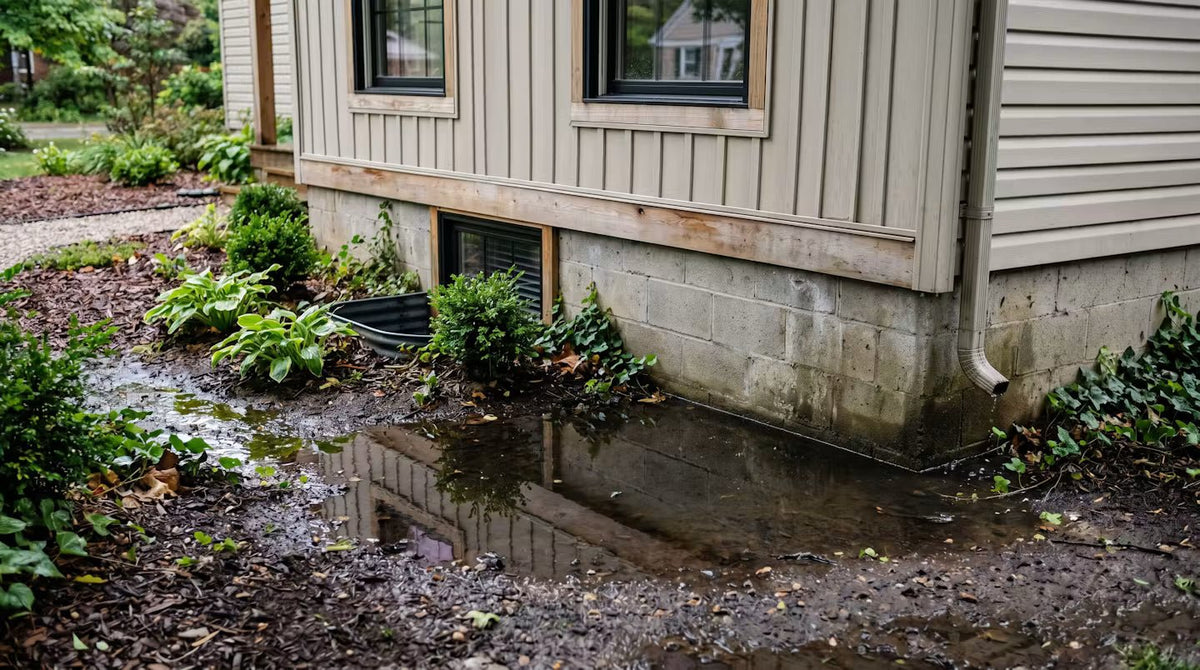
If puddles form within a few feet of your foundation and take more than a few hours to drain, your grading or drainage isn't doing its job. Water should move away from the house, not toward it or alongside it. Consistent pooling in this zone puts cumulative pressure on your foundation over time.
If puddles form within a few feet of your foundation and take more than a few hours to drain, your grading or drainage isn't doing its job. Water should move away from the house, not toward it or alongside it. Consistent pooling in this zone puts cumulative pressure on your foundation over time.
2. Damp or Wet Basement Walls
Moisture on interior basement walls is a direct signal that water is pressing against the exterior of your foundation. It often appears as dark patches, streaking, or a persistent musty smell.
Moisture on interior basement walls is a direct signal that water is pressing against the exterior of your foundation. It often appears as dark patches, streaking, or a persistent musty smell.
3. Soil Erosion Near the Foundation
Bare soil, washed-out mulch, or visible root exposure near the base of your home indicates that water is moving across the surface with enough volume and velocity to displace material. Erosion near the foundation means water is consistently concentrating there, and some of it is going places you can't see.
Quick Fixes for a Pooling Water
These are low-cost, high-impact adjustments that resolve a surprising number of foundation drainage issues without any major work.
Downspout Extensions
Most downspouts terminate two to three feet from the foundation—close enough to dump concentrated roof runoff directly into the zone you need to keep dry. Extensions or flexible drainage pipes that redirect discharge six to ten feet away from the house eliminate one of the most common sources of foundation-adjacent pooling with minimal cost or effort.
Splash Blocks
Where extensions aren't practical, splash blocks positioned at the base of each downspout
break the force of concentrated discharge and encourage water to spread and move away from the foundation rather than pool and infiltrate. Make sure they're sitting on a slight outward grade.
break the force of concentrated discharge and encourage water to spread and move away from the foundation rather than pool and infiltrate. Make sure they're sitting on a slight outward grade.
Medium Fixes for Pooling Water
When quick fixes don't fully close the gap, the next step is correcting the grade and flow
patterns around the house.
patterns around the house.
Regrading Soil Away From the House
The ground around your foundation should slope away from the structure at a minimum of one inch per foot for the first six feet. If your soil has settled flat or slopes back toward the house, regrading with compatible fill corrects the grade and gives water a clear path away from the structure.
Dry Creek Beds and Swales
If regrading alone doesn't give water a clear outlet, a graded swale or dry creek bed creates a defined flow path that carries water away from the foundation toward a suitable discharge point. This can be done without heavy equipment on most residential lots and functions as a landscape feature when executed well.
When to Consider a Drainage System
If surface corrections aren't keeping up with water volume, or if your site conditions make
regrading impractical, a dedicated drainage system is the right next step. Three options are worth knowing:
regrading impractical, a dedicated drainage system is the right next step. Three options are worth knowing:
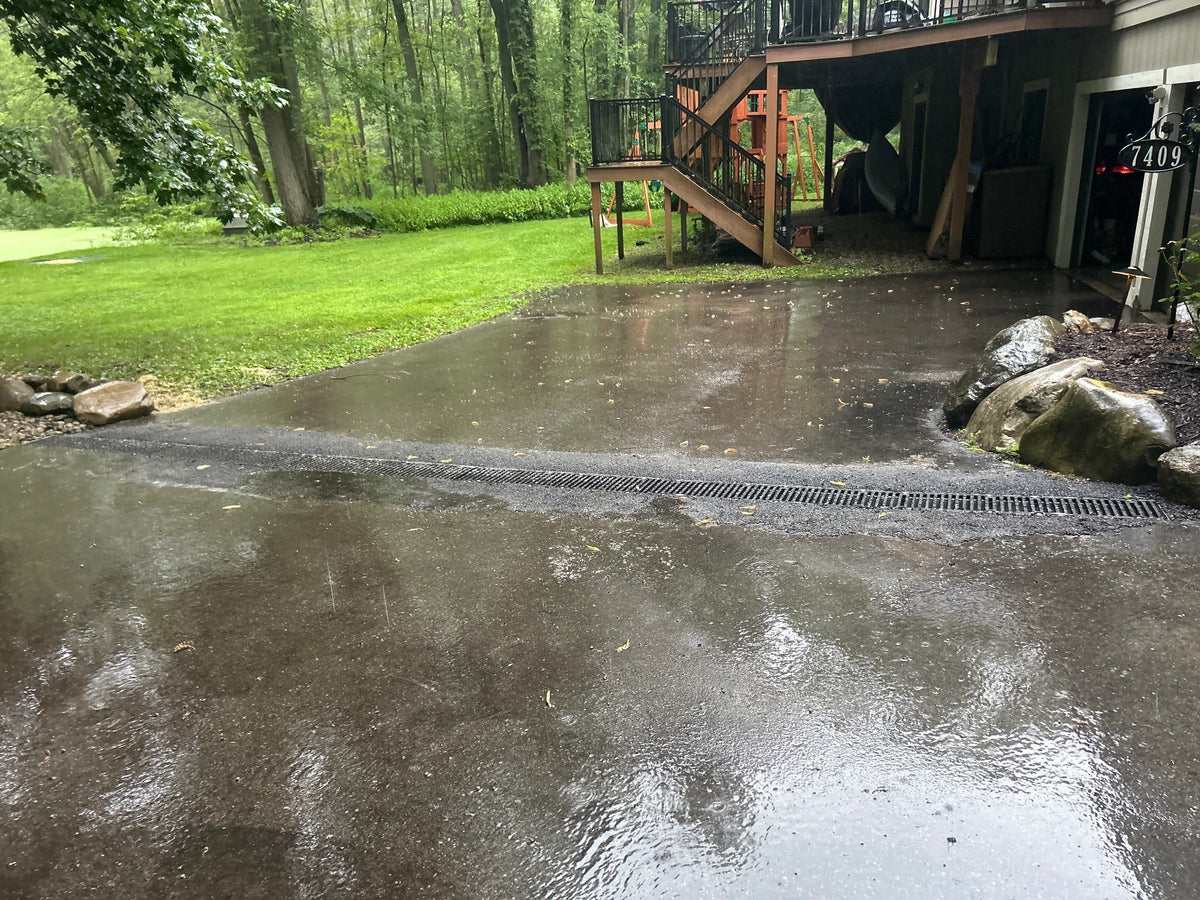
Trench Drains are linear surface drainage systems installed across driveways, walkways, or
paved areas adjacent to the foundation. They intercept sheet flow before it reaches the house and redirect it through a piped outlet. Ideal for homes where water sheets across hardscape toward the foundation during heavy rain.
paved areas adjacent to the foundation. They intercept sheet flow before it reaches the house and redirect it through a piped outlet. Ideal for homes where water sheets across hardscape toward the foundation during heavy rain.
Catch Basins are point-collection systems installed in low spots in the yard or along paved areas. They capture pooling water through a grated inlet and discharge it through underground piping to a suitable outlet. Well-suited for isolated low areas where water consistently concentrates.
Pre-Sloped Drain Systems take the guesswork out of installation by building the drainage gradient directly into the channel. Rather than relying on precise field grading to achieve proper flow, the slope is engineered into the product, ensuring consistent water movement toward the outlet regardless of site variation.
3 Mistakes to Avoid
These missteps can turn a fixable drainage problem into an expensive one.
Mistake 1: Grading With the Wrong Material
Backfilling around a foundation with topsoil or mulch alone retains moisture against the very surface you're trying to protect. Use compactable fill for the base grade. These materials shed water rather than absorbing it.
Mistake 2: Discharging Water Too Close to the House
Extending a downspout three feet instead of six, or positioning a drain outlet still within the foundation zone, just relocates the problem slightly. Any discharge point needs to terminate far enough away that water cannot migrate back through the soil.
Mistake 3: Treating Interior Symptoms Without Fixing the Exterior Cause
Interior sealants and drainage mats manage water intrusion but don't stop water from pressing against the foundation in the first place. Treat the exterior drainage conditions first. Interior products work best as a complement, not a substitute.
Dry Foundations Are Built on Good Drainage Decisions
Water pooling near your foundation is one of those problems that rewards early action and punishes delay. The right fix depends on how much water you're managing and where it's coming from. Start with the simplest correction, evaluate whether it's enough, and work up from there.
A foundation that stays dry isn't the result of luck; it's the result of water being given a clear, intentional path away from your home from the moment it hits the ground.

Leave a comment
This site is protected by hCaptcha and the hCaptcha Privacy Policy and Terms of Service apply.