 Full Catalog PDF

Key Takeaways:
-
Catch basins collect surface water, while sand traps capture sediment and debris before it clogs your system.
-
Using the wrong one for the wrong application means more maintenance, reduced performance, or both.
-
In many installations, both work together: the sand trap keeps the system clean while the catch basin manages the water volume.
-
Vodaland's sand traps are designed to fit inline with existing trench drain, slot drain, and pre-slope systems.
Sand traps and catch basins get lumped together a lot, and it's easy to see why. Both sit in the ground, both have grates, and both deal with water. But they're built to do different jobs. Picking the wrong one, or skipping one entirely, is one of the more common reasons drainage systems require more maintenance than they should.
Here's a clear breakdown of what each one does, where each one belongs, and how to decide which your project needs.
What Does a Catch Basin Do?
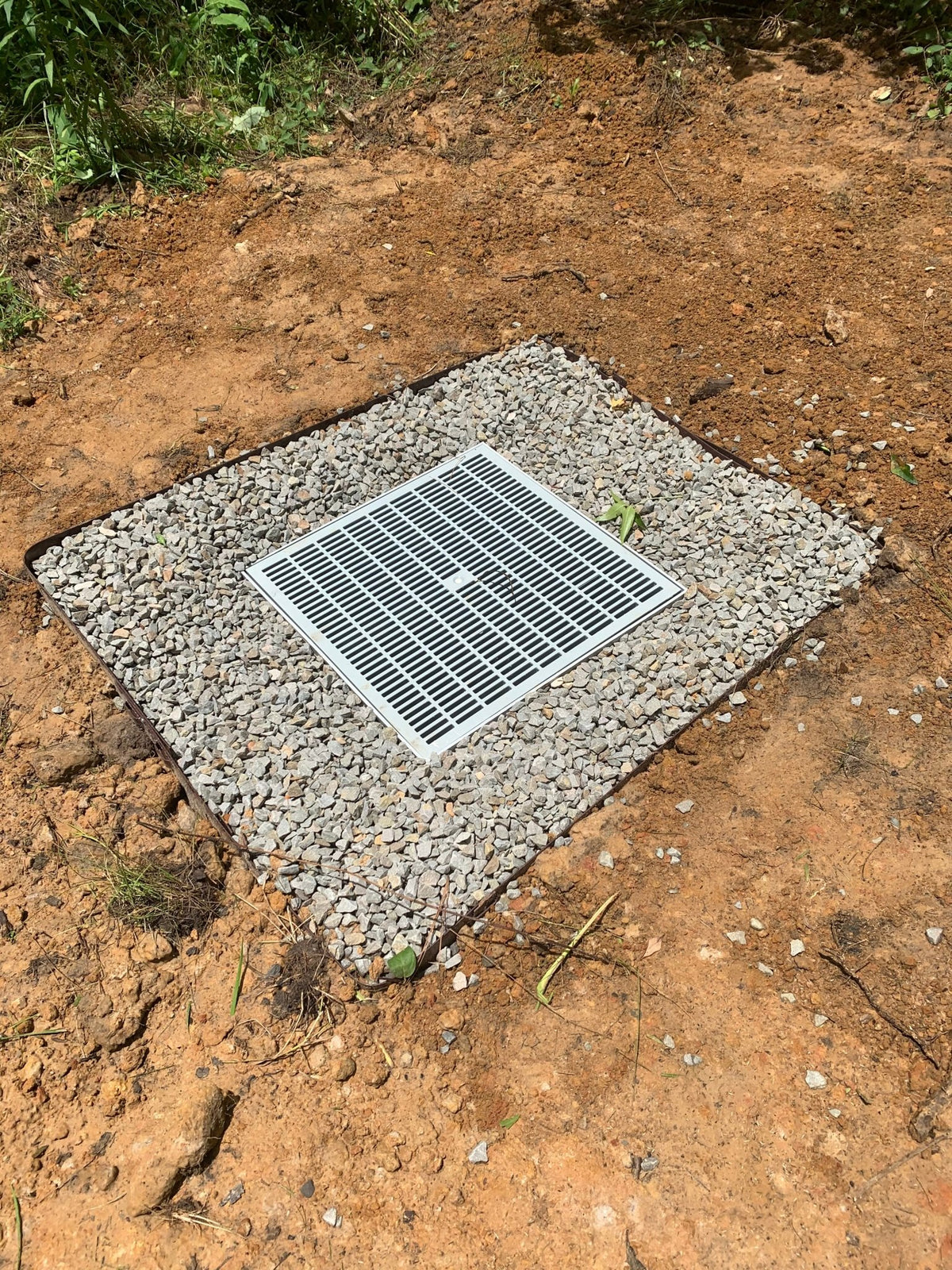
A catch basin is a collection point for surface water runoff. It sits at a low point (the end of a drainage channel, a driveway apron, the base of a slope) and captures water through a grated inlet before routing it away through a connected outlet pipe.
The main job of a catch basin is moving water. It's designed for volume: collecting surface runoff and getting it out of an area before it pools or causes damage. Catch basins are the right solution when the problem is water accumulation at a specific point on your property.
Common applications include the base of downspouts, low spots in driveways and parking areas, the end of channel drain runs, and any location where water consistently collects after rain.
Vodaland's catch basin range covers residential through industrial applications, with multiple inlet and outlet configurations. There’s also a full range of grate materials to match the load class and environment of the installation:
-
Plastic for light residential use
-
Galvanized steel for standard foot traffic and light vehicles
-
Cast iron for heavy vehicle applications
What Do Sand Traps Do?
A sand trap (also called an inline basin or sediment trap) captures and filters debris before it reaches the outlet pipe. Where a catch basin moves water, a sand trap cleans it. Sediment, leaves, gravel, and organic material that enter the drainage system settle into the sand trap's basket rather than traveling through the pipe and accumulating where they're much harder to remove.
The key distinction is filtration over collection. A sand trap doesn't replace a catch basin; it protects the drainage system downstream from it.
Without a sand trap in the system, debris travels through the drain channel and into the outlet pipe. Over time it accumulates, reduces flow capacity, and eventually causes blockages that require clearing from inside the pipe.
When to Use a Sand Trap, a Catch Basin, or Both
Here’s your cheat sheet:
Use a catch basin when:
-
Water pools at a specific low point and needs a direct outlet
-
A downspout is discharging too close to the house or a structure
-
A channel drain run needs a collection terminus
-
You're managing surface runoff from a driveway, parking area, or hardscape zone
-
A single point solution is more practical than a linear drain system for your site
Use a sand trap when:
-
Your drainage system runs through or near areas with high leaf, sediment, or debris load
-
You want to protect outlet pipes from blockage without frequent pipe cleanouts
-
You have an existing channel drain installation that needs better debris management
-
The system serves a commercial or high-traffic area where consistent performance matters
-
Maintenance access is a priority and you want cleanout to be quick and straightforward
Use both when:
-
You have a full channel drain system with a catch basin terminus and significant debris load upstream
-
The site has trees, landscaping, or organic material near the drainage run
-
You want a system that manages water volume and stays clean between service intervals without major maintenance
How to Choose Between Catch Basins and Sand Traps
Start with the primary problem.
If water is pooling and needs somewhere to go, use a catch basin. If your existing drainage system is getting clogged with debris and requires frequent cleanup, use a sand trap. If you're designing a new system from scratch and the site has any significant debris load, use both.
Here are a few other factors worth considering:
-
Maintenance access. Sand traps with removable baskets make debris removal fast. If the system is in a high-traffic area or a commercial setting where maintenance needs to happen quickly and without disruption, an accessible inline sand trap is worth prioritizing.
-
Existing system compatibility. If you already have a trench drain or slot drain in place, Vodaland's sand traps are designed to fit inline without requiring modifications to the surrounding installation. That makes adding sediment capture to an existing system a straightforward project rather than a significant one.
-
Site conditions. Heavy leaf cover, gravel surfaces, bare soil nearby, or landscaping adjacent to the drain run all increase the debris load a system needs to handle. The higher the debris load, the more important proper sediment capture becomes.
Match the Product to the Problem
Catch basins and sand traps are complementary products, not competing ones. Together, they cover both sides of the drainage problem. Used separately, each one handles its specific job well—as long as it's the right tool for what the site actually needs.
If you're not sure which setup fits your project, Vodaland's team can help you work through it before anything gets installed.

Leave a comment
This site is protected by hCaptcha and the hCaptcha Privacy Policy and Terms of Service apply.