 Full Catalog PDF

Key Takeaways:
- Erosion happens when water moves faster than soil can absorb it.
- The right erosion control solution depends on the scale of the problem, the site conditions, and who's managing the land.
- Permeable surfaces, ground stabilization grids, and proper drainage work together for erosion control.
- Catching erosion early is significantly cheaper than repairing the damage after it's progressed.
Erosion is one of those problems that starts small and compounds fast. A little soil displacement after a heavy rain becomes a rut, the rut becomes a washout, and the washout becomes a problem that costs real money to fix.
The good news is that erosion is predictable. It follows water, gravity, and soil type, which means it's also preventable when you address the right conditions early. This guide covers what erosion actually is, what causes it, and the solutions available at every scale, from a residential backyard to a large agricultural or civil project.
If you're starting from scratch, our guide on What Erosion Control Is? covers the fundamentals. For slope-specific situations, How to Control Erosion on a Slope goes deeper on that application specifically.
How Erosion Happens and Why It Gets Worse Over Time
Erosion occurs when water moves across or through soil faster than the soil can absorb or resist it. That moving water carries soil particles with it, and once the process starts, it tends to accelerate.
Bare soil erodes faster than vegetated soil. Compacted soil sheds water rather than absorbing it. Slopes concentrate flow and increase velocity. Any combination of these conditions speeds up the damage.
The most common triggers are heavy rainfall on bare or disturbed ground, poor grading that concentrates runoff, and surfaces that generate more water than the surrounding soil can handle (roofs, driveways, and paved areas all fall into this category).
When ignored, erosion removes the topsoil that supports plant growth, undercuts hardscape, destabilizes slopes, and contributes sediment to nearby drainage systems and waterways.
Erosion Control for Homeowners
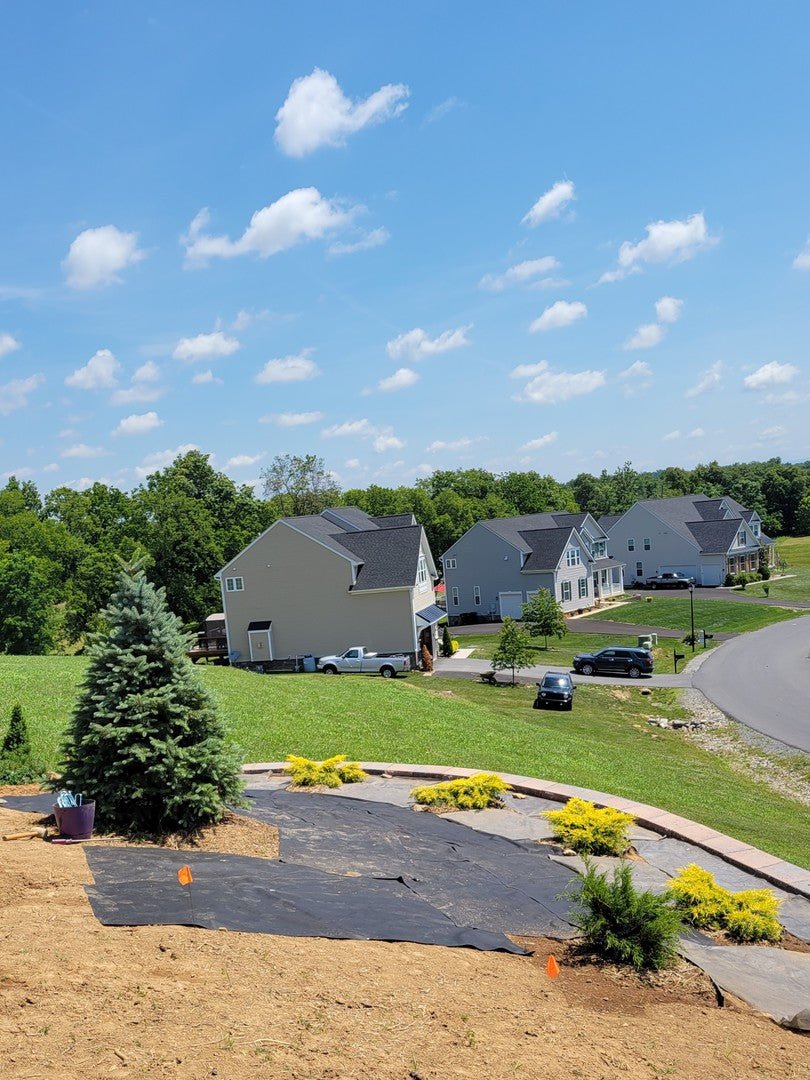
For most residential properties, erosion shows up in a few predictable places: sloped yards, lawn edges adjacent to driveways, areas downhill from downspouts, and bare soil in new landscaping.
Permeable Pavers
One of the most effective residential erosion solutions is replacing impervious surfaces with permeable ones. Vodaland's permeable paver systems allow water to filter through the surface rather than running off it, reducing the volume and velocity of runoff that reaches surrounding soil.
For driveways, walkways, and parking areas, this makes a direct difference in how much erosive force the adjacent landscaping has to deal with. They're also low-maintenance and built to handle everyday vehicle and foot traffic without sacrificing drainage performance.
Dry Wells
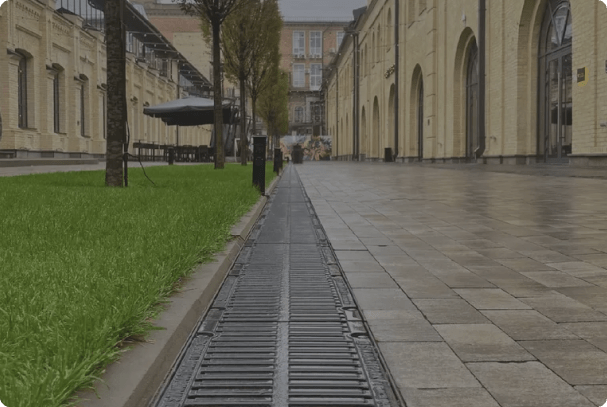
For concentrated runoff from roofs, downspouts, or low areas in the yard, a dry well collects excess water and disperses it gradually into the ground rather than letting it sheet across the surface.
Vodaland's DryWell system built from high-strength materials, compatible with trench drains and catch basins, and simple enough to install without heavy equipment. It's a practical fix for homeowners dealing with recurring pooling and erosion in the same low spot after every rain.
For installation guidance on either of these solutions, check out Vodaland's specs and installation library.
Erosion Control for Contractors
Contractors deal with erosion at a different scale: disturbed soil on active job sites, graded slopes awaiting landscaping, and hardscape transitions that need to manage runoff during and after construction.
GeoCell Systems
Geo cells are one of the most versatile contractor tools for erosion control. Vodaland's GeoCell system uses a honeycomb structure that locks soil and aggregate in place, preventing washouts and soil movement even on steep or uneven terrain.
It works for embankments, driveways, pathways, and landscaping projects—anywhere the ground needs to be stabilized before vegetation can establish or hardscape can be completed. Lightweight and straightforward to install, geo cells give contractors a reliable way to hold a graded surface in place through weather events before the project is fully finished.
Permeable Pavers
In contractor applications, permeable pavers do double duty. They provide a durable finished surface and manage stormwater on-site rather than sending it elsewhere. For clients looking for sustainable, low-maintenance hardscape that holds up to vehicle traffic and manages runoff, permeable pavers are increasingly the specified solution over standard concrete or asphalt.
Erosion Control for Engineers and Agricultural Applications
At the engineering and agricultural scale, erosion control moves from individual product selection into site-wide management strategy. The solutions need to handle heavier loads, larger surface areas, and more demanding environmental conditions.
Farm Grid Systems
Agricultural land faces erosion challenges that residential and commercial sites don't: livestock traffic, heavy equipment, and high-traffic areas like feeding zones that get churned up quickly in wet conditions.
Vodaland's FarmGrid system engineered specifically for these demands. It handles tractors, livestock, and heavy equipment while preventing rutting, mud buildup, and soil compaction. The grids maintain natural drainage underneath, which means water moves through rather than pooling on the surface and destabilizing the ground further.
For farm roads, animal enclosures, and pasture areas, it's one of the more practical ground stabilization solutions available.
GeoCell for Civil and Infrastructure Applications
At the civil engineering scale, geo cells are used for slope stabilization on embankments, road shoulders, retaining wall face protection, and channel lining. The honeycomb structure confines fill material and distributes load across the surface, preventing displacement even under sustained hydraulic pressure or heavy point loads.
For engineers specifying erosion control on larger infrastructure projects, geo cells combined with geotextile underlayment provide a system that holds up through the conditions that matter most.
How Erosion Control Solutions Work Together
Erosion control rarely comes down to a single product decision. The most durable results come from layering solutions that address different parts of the water-soil interaction.
A typical residential slope application might combine a geo cell system on the slope face, a permeable paver surface at the base to manage runoff, and a dry well to handle concentrated discharge from nearby downspouts. A contractor working on a graded site might use geo cells to stabilize disturbed slopes during construction, then transition to permeable pavers for the finished hardscape.
The common thread is treating erosion as a water management problem—because that's what it is. Control where the water goes and how fast it moves, and the soil stays where it belongs.
Start Before the Damage Does
Erosion is much easier to prevent than repair. By the time a washout is visible, the underlying conditions have usually been building for a while. Whether you're a homeowner dealing with a soggy slope, a contractor managing a graded site, or an engineer specifying a large-scale stabilization system, the right solution exists. The key is matching it to the actual site conditions rather than reaching for the most familiar option.

Leave a comment
This site is protected by hCaptcha and the hCaptcha Privacy Policy and Terms of Service apply.