 Full Catalog PDF

Key Takeaways:
- Water pooling near your foundation is almost always caused by one of four things, and most of them are fixable without major excavation.
-
The damage happens slowly and out of sight, which is why most homeowners act too late.
-
Extending downspouts and correcting soil grade resolve the majority of foundation drainage problems at minimal cost.
-
When surface fixes aren't enough, a catch basin at the base of your downspout gives water a controlled, piped exit route away from the house.
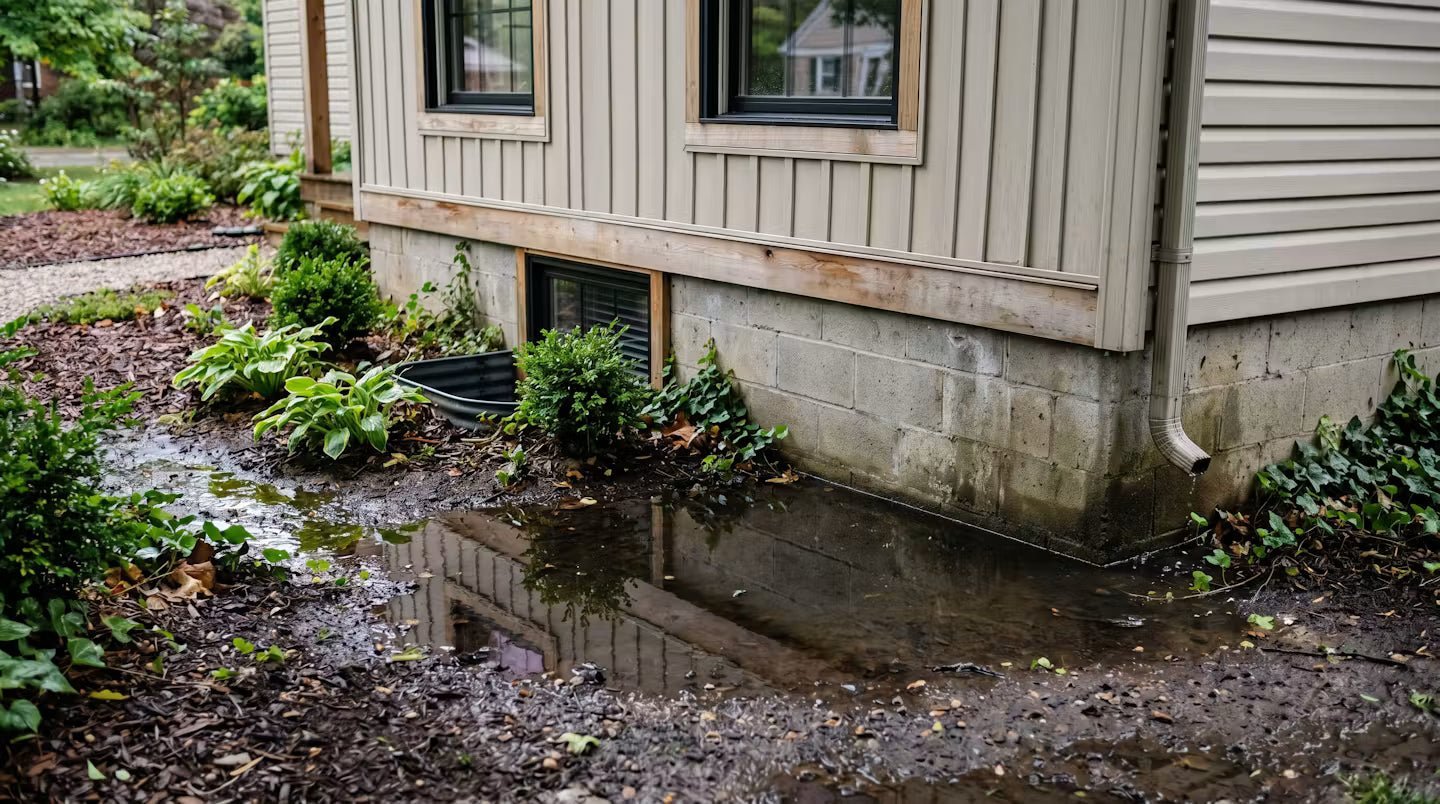
Water pooling near your foundation usually starts small. A puddle that lingers a little too long after rain, soil that stays soft near the house, a musty smell in the basement you keep meaning to investigate. By the time the damage is visible, it's usually been building for seasons.
The good news is that the causes are well understood, the fixes are straightforward, and most of them are well within reach of a motivated homeowner.
Let’s walk through why it happens, what it does to your home if left alone, and exactly how to fix it.
Why Does Water Pool Near Your Foundation?
Most foundation pooling comes down to one of these four conditions.
Poor Grading or Soil Settlement
The ground around your foundation should slope away from the house. Over time, soil settles, compacts, and shifts—and a grade that was correct when the home was built may no longer be doing its job. When the slope flattens or reverses, water follows gravity straight to the foundation wall.
Downspouts Terminating Too Close to the House
A standard downspout dumps concentrated roof runoff at the base of your home, sometimes within two feet of the foundation. During a heavy rain event, that's a significant volume of water deposited exactly where you don't want it. This is one of the most common and most overlooked contributors to foundation moisture problems.
Clay-Heavy or Compacted Soil
Soil that drains slowly (particularly clay) holds water near the surface long enough for it to migrate toward the foundation rather than absorbing downward. Compacted soil around the perimeter of the home, common in newer construction, has the same effect.
Hardscape Directing Water Toward the House
Driveways, patios, and walkways that slope toward the foundation funnel surface runoff directly into the foundation zone with every rain event.
What Happens When You Ignore Water Pooling?
Left unaddressed, the consequences escalate in predictable stages, including foundation cracking and structural stress, basement and crawlspace water intrusion, and soil erosion and landscape damage.
Foundation Cracking and Structural Stress
Saturated soil puts pressure against foundation walls. Over time, that pressure causes cracking, bowing, and in serious cases, structural movement. In freeze-thaw climates, water that enters small cracks expands when it freezes, widening those cracks season after season until what started as a hairline becomes a structural repair.
Basement and Crawlspace Water Intrusion
Even without visible cracking, water under pressure works through concrete via capillary action. Damp basement walls, efflorescence, and active seeping are all symptoms of exterior water that's found a way in. Crawlspaces are particularly vulnerable. Moisture intrusion there damages insulation, promotes wood rot, and creates conditions where mold establishes quickly and spreads without detection.
Soil Erosion and Landscape Damage
Visible erosion (washed-out mulch, bare soil near the foundation, exposed roots) is often the first sign that water is concentrating around the house. It's worth taking seriously as an early warning before the damage moves below the surface.
How to Fix Water Pooling: From Simple to Systematic
Most foundation drainage problems can be resolved in stages. Start with the least invasive fix and work up only if needed.
Step 1: Extend Your Downspouts
Downspout extensions or flexible drainage pipe should carry roof runoff at least six to ten feet from the foundation before discharging. On a sloped lot, further is better. If your downspouts currently terminate at a splash block against the house, this step alone can reduce pooling.
Step 2: Regrade the Soil Around the Foundation
The target is a minimum slope of one inch per foot for the first six feet away from the house. Use compactable fill (not topsoil or mulch, which retain moisture) to build up the grade, then top with a thin layer of topsoil and ground cover. This is a manageable weekend project on most lots and one of the highest-return fixes available.
Step 3: Install a Catch Basin at Your Downspout
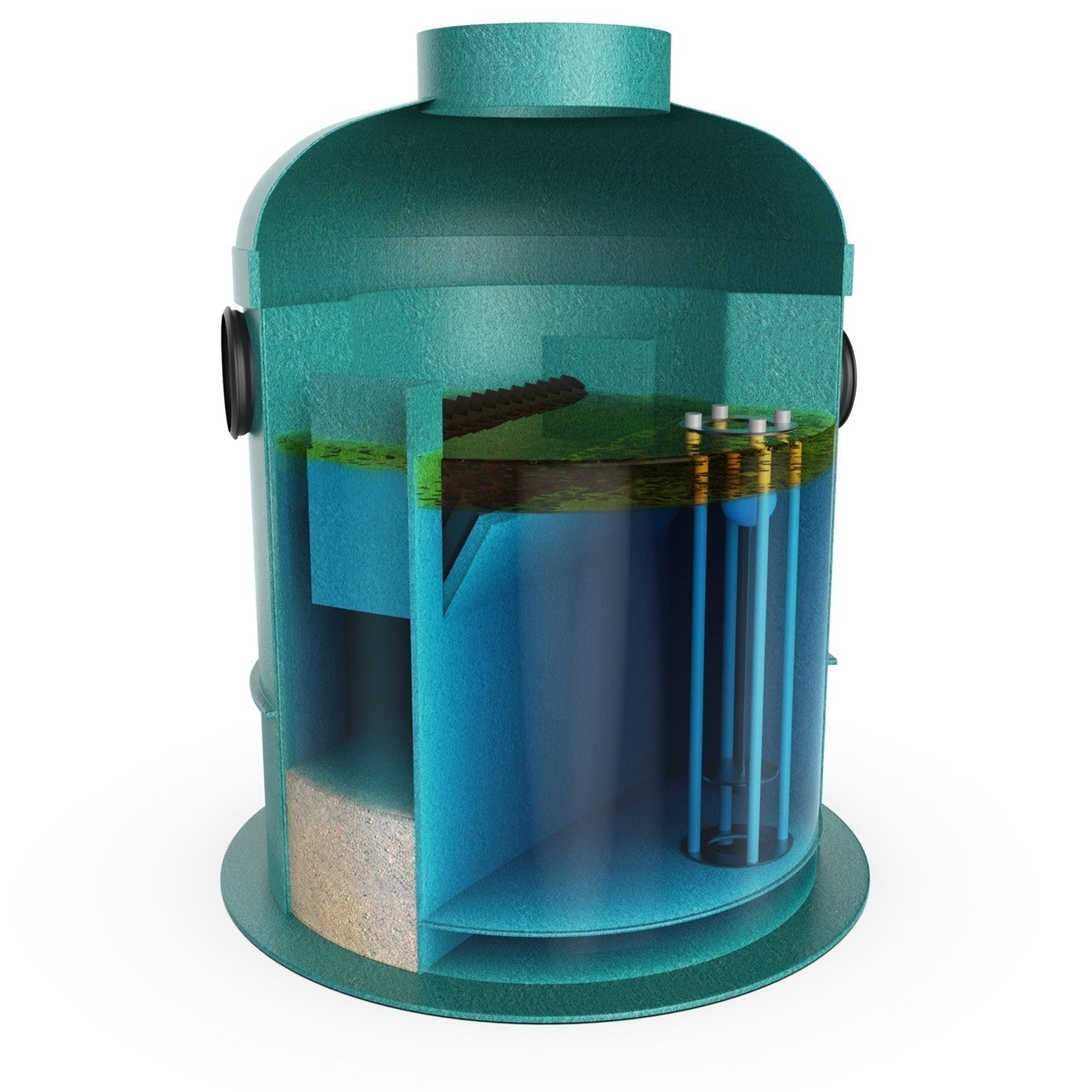
A catch basin gives water a direct, controlled path underground and away from the house. Vodaland's Downspout Catch Basin is designed specifically for this application.
It sits directly under the downspout, collects the discharge, and connects to 2", 3", 4", or 6" piping that carries water to a suitable outlet well away from the foundation.
A built-in debris basket keeps leaves and debris out of the pipe so the system stays clear, and the removable grate makes cleanout straightforward. It's one of the more practical fixes in the toolkit: targeted, effective, and installable in an afternoon.
How to Install a Downspout Catch Basin
This install is approachable for most homeowners with basic tools and a few hours.
What You'll Need: Shovel, level, outlet pipe (sized to your connection), pipe connectors, Schedule 40 adapter, gravel for base, and landscape fabric if desired.
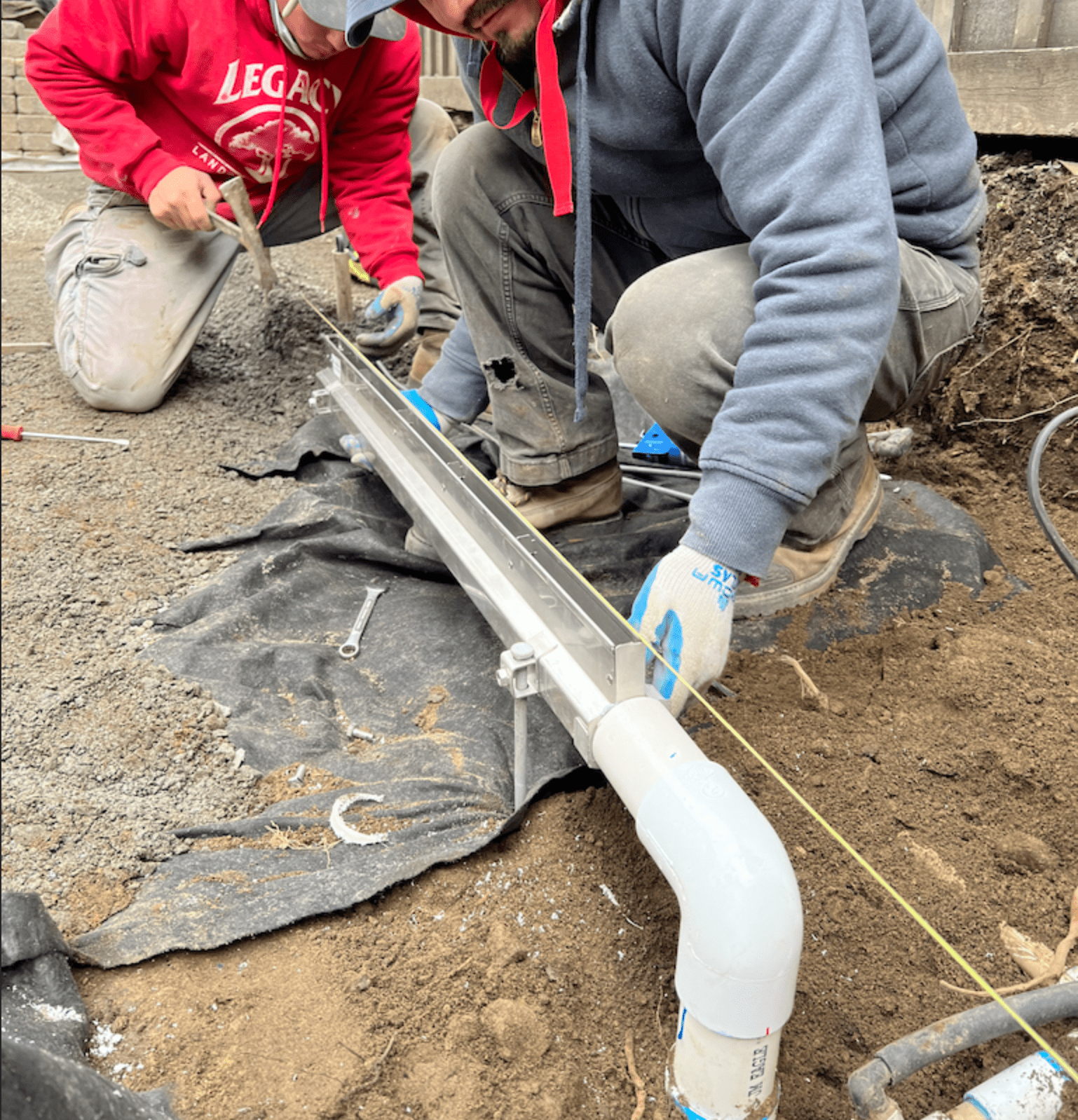
Site Prep: Mark the position directly below the downspout outlet. Dig a hole sized to the basin with an additional two to three inches on all sides for adjustment room. Dig the trench for your outlet pipe at the same time, sloping away from the house at roughly one inch per eight feet of run.
Setting the Basin: Add a gravel base layer for drainage and leveling. Set the basin, check its level side to side and sloped correctly toward the outlet. Connect your outlet pipe using the appropriate size knockout and a Schedule 40 adapter.
Connecting the Outlet: Run your outlet pipe through the trench to your discharge point. A daylight outlet at a slope, a storm drain connection, or a drywell if subsurface dispersal is the goal. Ensure consistent downward slope throughout the run.
Backfilling and Finishing: Backfill around the basin and along the pipe trench, compacting as you go. Position the grate flush with or slightly below grade. Redirect your downspout into the basin inlet and test with a hose before finishing the surface.
Check out the full installation walkthrough
Water Pooling Is a Solvable Problem (If You Don't Wait Too Long)
Foundation water damage is slow, consistent, and expensive to reverse once it's progressed. But it's also one of the more preventable home maintenance problems out there. The causes are visible, the fixes are tiered, and none of them require major construction when caught early.
Start with your downspouts and your grade. Add a catch basin if the volume calls for it. And treat the first sign of damp basement walls or soil erosion as the early warning it is—not something to revisit next season.
Reach out to a Vodaland Clean World Designer for additional questions on pooling near your foundation and how Vodaland products can assist.

Leave a comment
This site is protected by hCaptcha and the hCaptcha Privacy Policy and Terms of Service apply.