 Full Catalog PDF

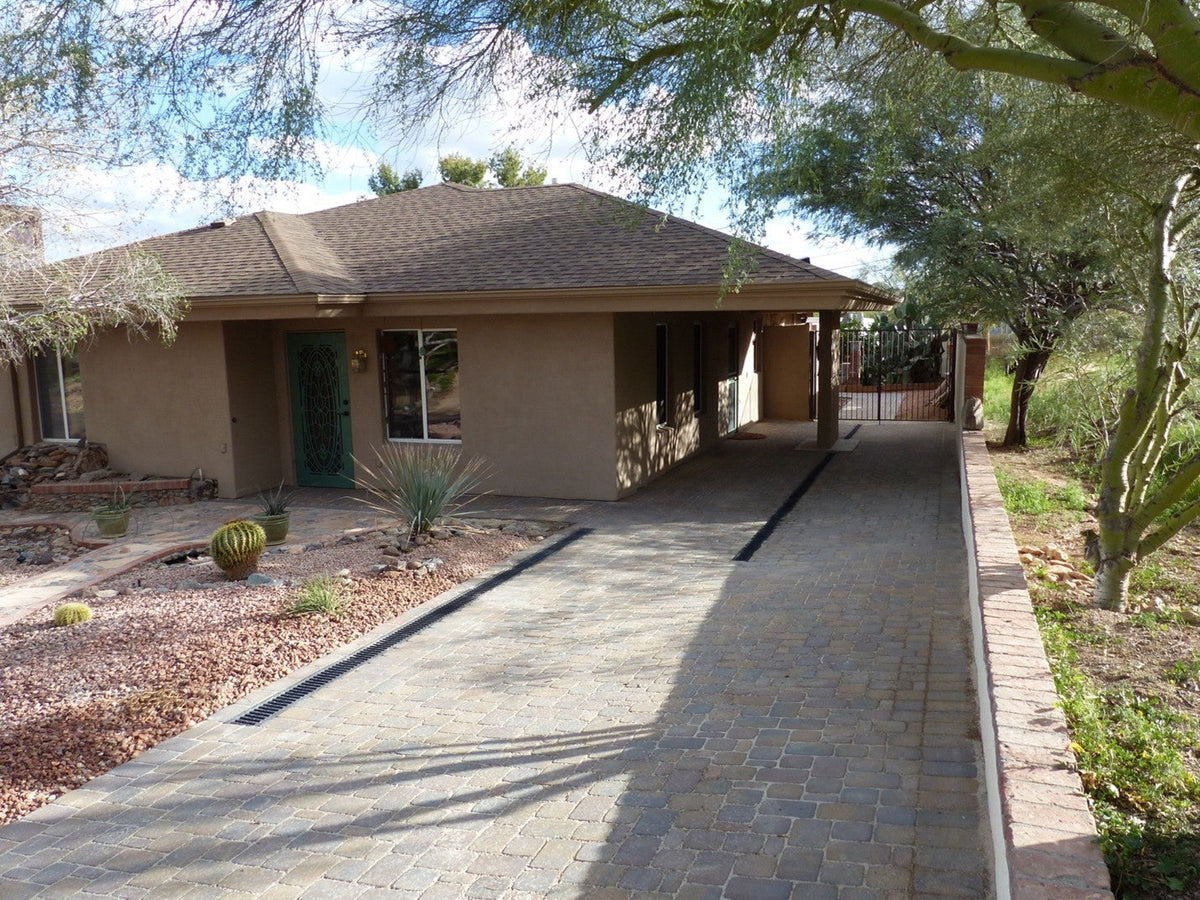
- French drains manage groundwater below the surface, while surface drainage handles runoff above it.
- Impervious surfaces like driveways and parking lots need surface drainage first.
- Many sites need both systems working together, not one or the other.
- Choosing the wrong system costs more to fix than getting it right from the start.
experienced contractors make when choosing between them.
What Is a French Drain?
What Is Surface Drainage?
When a French Drain Is the Right Call
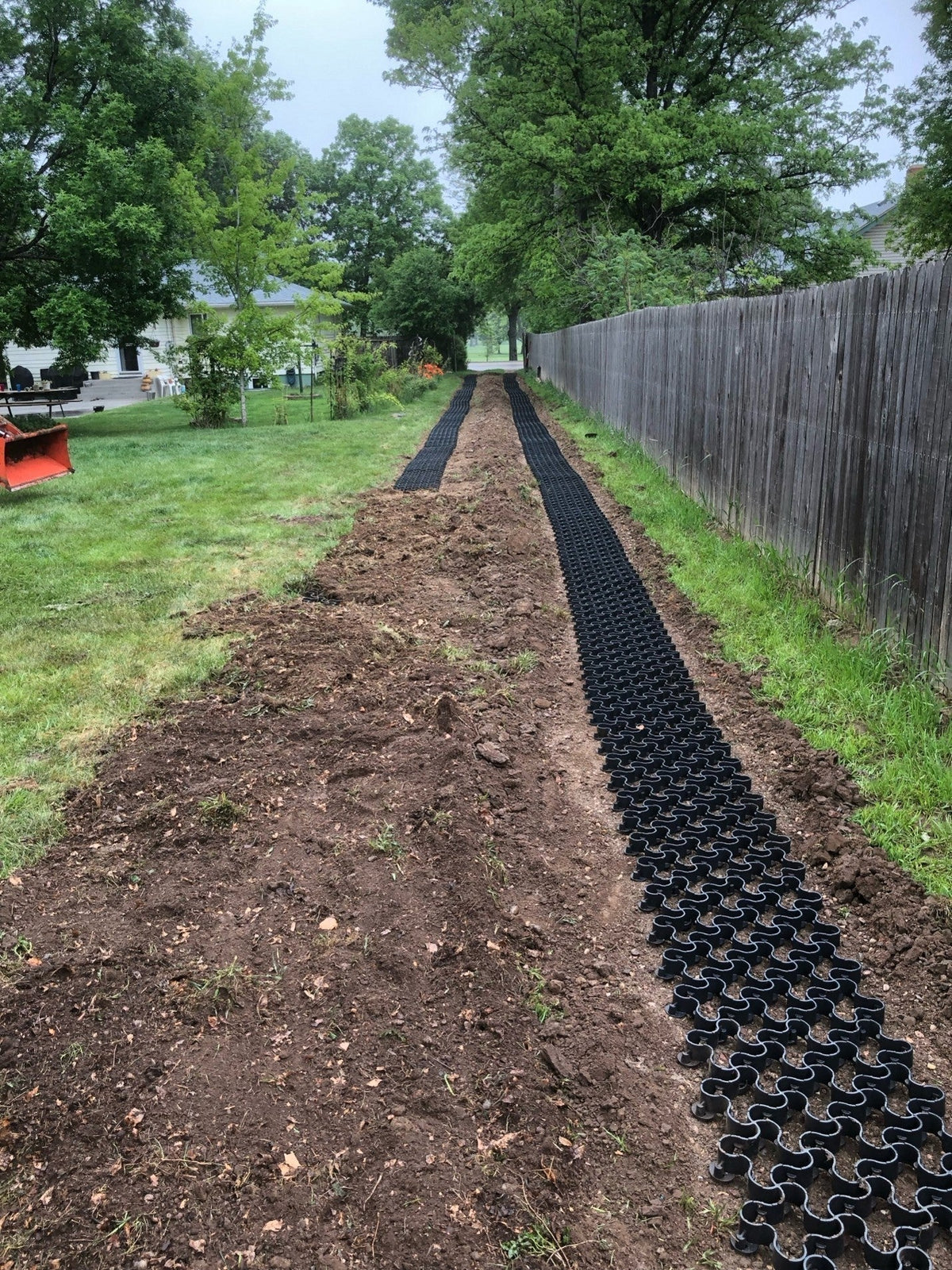
- Saturated or waterlogged soil that stays wet long after rain
- Water seeping through foundation walls or collecting in basements
- Sloped yards where groundwater migrates laterally and surfaces in low areas
- Retaining wall drainage where hydrostatic pressure needs to be relieved
- Areas without hardscape where an above-ground system would be impractical
The key is that French drains solve a subsurface problem. Water that is moving underground needs an underground solution.
When Surface Drainage Is the Right Call
Surface drainage systems are the better choice when water hasn't entered the soil yet—or
when the volume and speed of runoff make subsurface collection impractical. Here are some ideal applications:
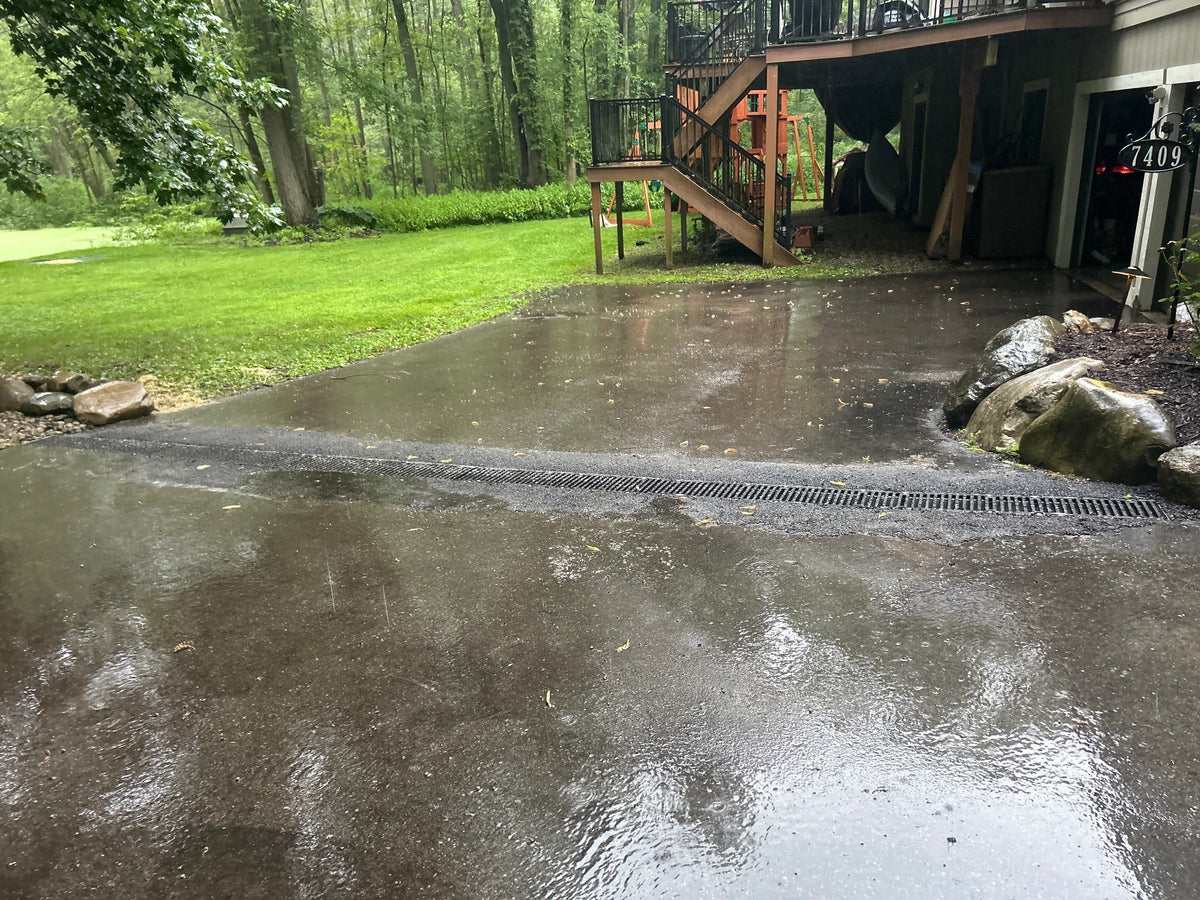
- Paved surfaces like driveways, parking lots, and commercial plazas where water cannot infiltrate
- Pool decks and patios where standing water poses safety and aesthetic issues
- Entryways and loading docks with high water volume during heavy rain events
- Sloped hardscape where water velocity makes surface capture more efficient than soil absorption
If your site is mostly impervious surface, a French drain isn't going to help much. The water
never reaches the soil in the first place.
When to Use French Drains and Surface Drainage Together
Many real-world sites require a layered approach. For example, a commercial property might need trench drains across paved areas to capture surface runoff, while a French drain along the building perimeter manages groundwater that could otherwise compromise the foundation.
Residential projects with both lawn and hardscape areas often run into the same need: surface systems for the driveway and patio, subsurface systems for the yard and garden beds.
The two systems aren't competing options. They address different parts of the water
management problem and work best when planned together.
2 Common Contractor Mistakes
Mistake #1: Overusing French Drains
French drains are often treated as a universal fix, but installing them in areas with primarily
surface runoff (especially on impervious or compacted soils) delivers little return.
Water that can't permeate the ground won't reach a perforated pipe. The result is an expensive installation that underperforms because the wrong system was chosen for the problem.
Mistake #2: Ignoring Surface Water Flow
Focusing exclusively on subsurface drainage while neglecting surface flow patterns is equally problematic. Without proper surface capture, water pools, erodes landscaping, damages structures, and overwhelms soil before it can be managed below grade.
A French drain downstream doesn't help much if water is sheeting across the surface and going somewhere else entirely.
Cost vs. Performance: Thinking It Through
French drains involve more labor (excavation, gravel, pipe, backfill) and their performance
depends heavily on soil permeability and proper slope. They're a smart investment when the problem is genuinely subsurface, but costly to install incorrectly or in the wrong conditions.
Surface drainage systems are typically faster to install, easier to inspect, and more
straightforward to maintain. In high-volume or high-velocity situations, they often outperform French drains—and do so at a lower installed cost per linear foot on paved surfaces.
The right question isn't which system is cheaper. It's which system solves your specific problem.
Real-World Scenarios
Scenario 1: Residential Backyard
Scenario 2: Commercial Parking Lot
Scenario 3: Mixed Residential Project
toward the house. The plan includes a channel drain across the driveway apron for surface
capture, plus a French drain along the landscaped border to manage soil saturation — both working in tandem.

Leave a comment
This site is protected by hCaptcha and the hCaptcha Privacy Policy and Terms of Service apply.