 Full Catalog PDF

Key Takeaways:
- Most surface drainage channels need a minimum slope of around 1% to keep water moving consistently toward the outlet.
-
Underground pipes require a steeper minimum (typically 2%) because there's no surface flow to assist water movement.
-
Too much slope is also a problem. High velocity water leaves sediment behind and can cause erosion at the outlet point.
-
If your site doesn't provide the right natural grade, a pre-sloped channel system solves the problem before installation begins.
Slope is one of those drainage details that sounds simple until you're standing on a site trying to figure out if you have enough of it. Too little and water stalls in the channel, sediment builds up, and clogs follow. Too much and water moves so fast it leaves debris behind inside the system and causes erosion.
Getting slope right is one of the most important (and most overlooked) factors in whether a drainage system performs the way it should. Here's what you actually need to know.
How Much Slope Does a Drainage System Need?
For most surface drainage channel systems (trench drains, slot drains, and channel drains) a slope of approximately 1% is the standard minimum. That's roughly one inch of drop for every eight feet of channel run.
At 1%, water moves consistently toward the outlet without stalling, sediment stays in suspension long enough to reach the collection point, and the system clears itself reasonably well between rain events. It's the sweet spot between too flat to drain and too steep to be practical on most residential and commercial sites.
Keep in mind that 1% is a minimum, not a target. On sites where debris load is high, a slightly steeper slope improves self-cleaning performance and reduces maintenance frequency.
How Much Slope Do Underground Pipes Need?
The 1% rule applies to open channel surface systems where water has gravity and surface tension working together. Underground pipes are a different story.
In a buried pipe, water has no surface to assist flow. It relies entirely on gravity through a closed system. The standard minimum slope for underground drainage pipe is 2%, or roughly one inch of drop per four feet of run. Below that threshold, water velocity drops low enough that sediment settles inside the pipe rather than being carried to the outlet.
For long underground runs, maintaining consistent 2% slope across the full length is critical. Any low point in the run creates a trap where water and debris collect, reducing effective pipe diameter over time and eventually causing backups.
Pre-Sloped vs. Neutral Channels: What's the Difference and Why It Matters
One of the most important decisions in specifying a channel drain system is whether to use a pre-sloped or neutral channel—and it comes down to what your site gives you to work with.
Neutral Channels
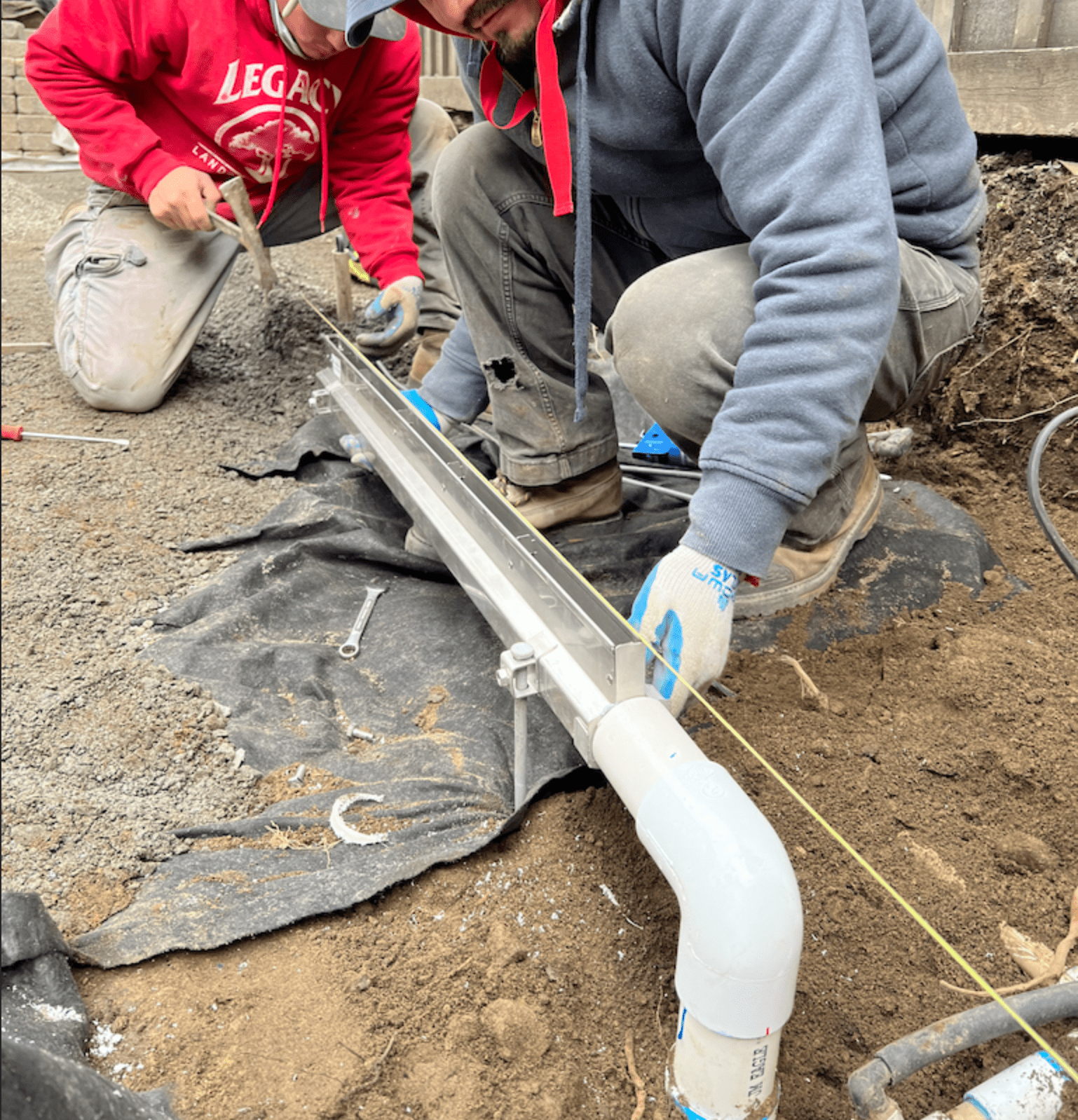
A neutral channel has a flat internal base. The drainage slope is created entirely by how the channel is installed in the field. The installer sets the gradient by adjusting the depth of the channel along its run, with one end sitting lower than the other to direct flow toward the outlet.
Neutral channels offer flexibility in outlet placement and work well on sites where the natural grade is consistent and reliable enough to establish the correct slope during installation.
Pre-Sloped Channels
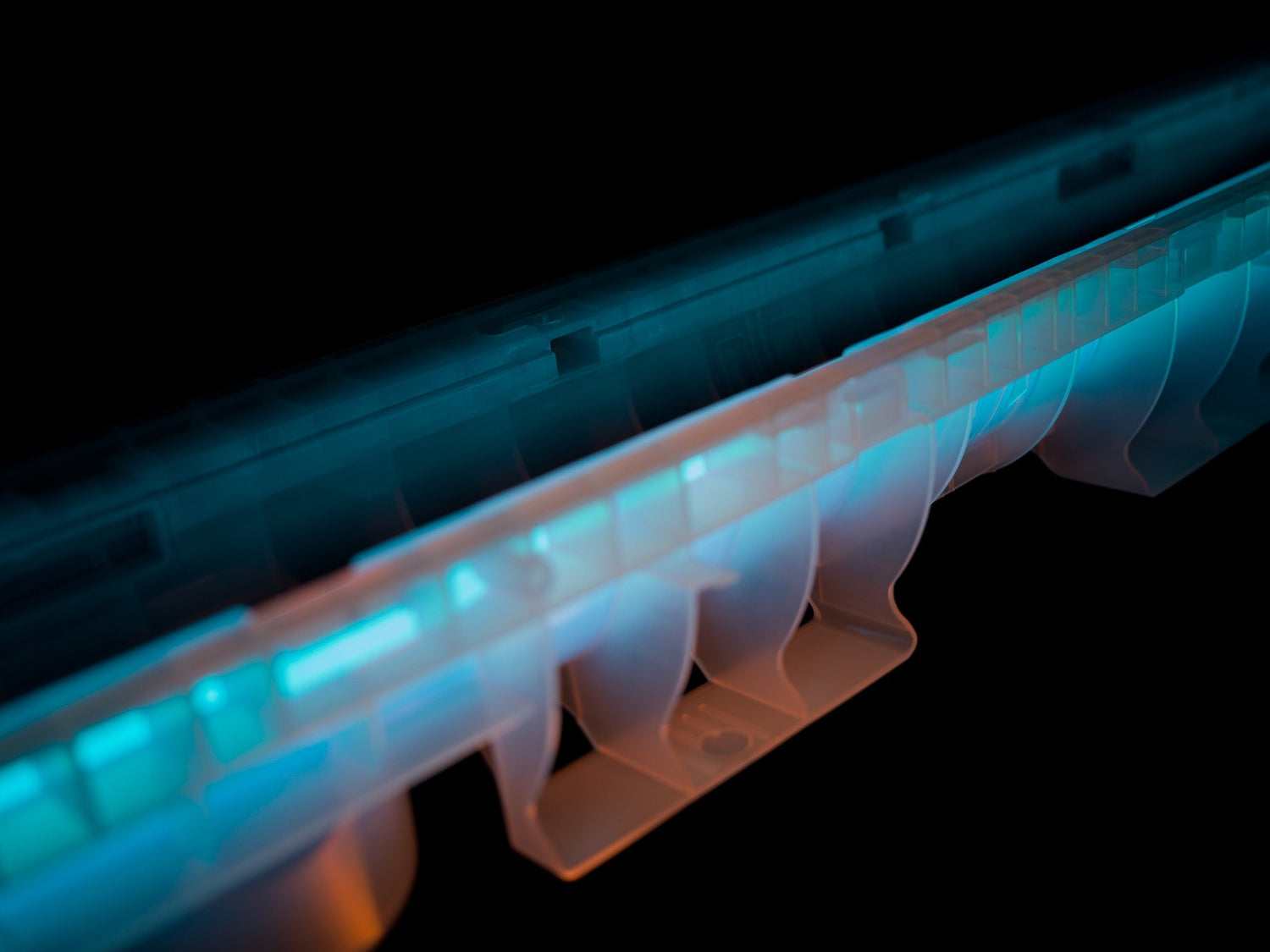
A pre-sloped channel has the drainage gradient built directly into the internal base of the channel itself. Even if the channel is installed perfectly level on the surface, water inside the channel flows toward the outlet because the floor of the channel is engineered to slope in that direction.
Pre-sloped systems are the right choice when site grade is inconsistent, when the installation needs to be level with the surrounding surface, or when reducing dependence on precise field grading is a priority. On sites where achieving consistent slope in the field is difficult, they're often the difference between a system that performs reliably and one that doesn't.
Outlet Spacing and Keeping the System Clear
Slope alone doesn't guarantee a clean system; outlet placement matters too.
As a general rule, surface channel runs longer than 30 to 50 feet benefit from an intermediate outlet or collection point rather than relying on a single outlet at the end of a long run. Longer runs with a single outlet require higher velocity to move debris the full distance, which means either steeper slope or more frequent maintenance.
For applications where sediment and debris load is a consistent concern, an inline sand trap is a practical addition to any channel system. Vodaland's Inline Sand Trap fits any 4" wide base channel and includes a removable debris basket that captures sediment, leaves, and organic material before they reach the outlet pipe. It accommodates most standard residential and commercial pipe configurations. Plus, the accessible basket design means maintenance takes minutes rather than a service call.
For point collection (low spots, base-of-slope positions, or downspout termination points), a catch basin provides an inlet with debris capture and a piped outlet. Vodaland's Catch Basin range covers residential through industrial applications, with multiple inlet and outlet configurations to suit most site conditions.
Pre-Sloped vs. Neutral: Choosing the Right One for Your Project
If your site has consistent, predictable grade and an experienced installer, a neutral channel gives you flexibility. If you're working with variable conditions, a DIY installation, or a surface that needs to stay level, pre-sloped is the more reliable choice.
|
Pre-Sloped |
Neutral |
|
|
Internal Slope |
Built into the channel |
Set during installation |
|
Best For |
Inconsistent site grade |
Reliable natural grade |
|
Installation Complexity |
Lower |
Higher |
|
Outlet Flexibility |
Fixed toward low end |
More flexible |
|
Risk of Slope Error |
Lower |
Higher |
Get the Slope Right Before Anything Else
Slope isn't a detail you can correct after the concrete is poured. It's the foundation of how the entire system performs. Know your minimum, match your channel type to your site conditions, plan your outlet spacing, and use inline debris capture where the application calls for it. Do those things and the system will move water the way it's supposed to—every time it rains.
Contact a Vodaland Clean World Designer to eliminate the uncertainty in your next project.

Leave a comment
This site is protected by hCaptcha and the hCaptcha Privacy Policy and Terms of Service apply.