 Full Catalog PDF

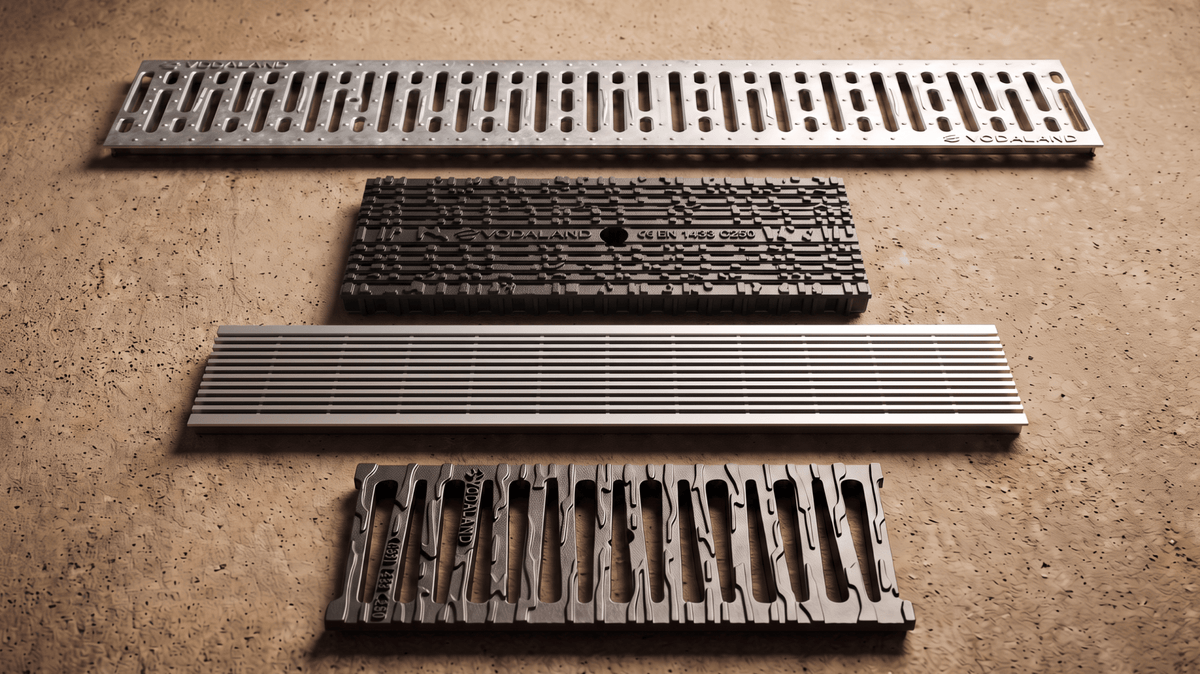
Key Takeaways:
1. Grate material determines how long it lasts in its environment. The wrong material in the wrong setting degrades faster than most people expect.
2. Load class is non-negotiable. A grate rated for foot traffic will fail under vehicle weight every time.
3. Knowing the difference between ADA-compliant and heel proof grating protects both users and property owners.
4. Most grate decisions come down to three questions: who's using the space, what are they driving or walking on it, and what's the environment like?
Choosing a trench drain grate doesn't get as much attention as it should. The channel does the drainage work, but the grate is what everything and everyone actually contacts. It takes the load, handles the exposure, and determines whether the installation is safe for the people using it. Pick the wrong one and you're looking at premature failure, a safety issue, or a compliance problem.
Here's a straightforward breakdown of which grate type fits which application.
When to Use a Plastic Trench Drain Grate
Plastic grates are the lightest and most affordable option, and they're a perfectly good fit for the right setting.
They work well in low-load, low-exposure applications. That includes garden beds, residential walkways, porches, and patios where foot traffic is light and the grate isn't taking any real punishment. They're also a practical choice where the grate needs to be removed and replaced regularly for cleaning, since the weight makes that easier.
Vodaland's 12x12 Plastic Grate fits the 12x12 Catch Basin and is both ADA compliant and heel proof. This covers safety requirements for residential walkway and patio applications without overspecifying on material.
Plastic doesn't belong anywhere with vehicle traffic or heavy use. It's not built for those conditions and won't hold up under them.
When to Use a Galvanized Steel Trench Drain Grate
Galvanized steel is the workhorse of the grate lineup. It covers the widest range of everyday residential and light commercial applications including patios, sidewalks, gardens, driveways, garages, and porches at a price point that makes sense for most projects.
The galvanized coating provides corrosion resistance for outdoor use, and stamped steel construction gives it the structural strength to handle foot traffic and light vehicle loads depending on the load class specified.
For standard foot traffic applications, Vodaland's 4" Channel Galvanized Stamped Steel Grate and the 8" Galvanized Steel Standard Grate both carry an A load classification. The 8" version works particularly well for longer channel runs and complex installations where consistent grating across the full length matters.
For applications that need to handle both foot traffic and occasional light vehicle loads (driveways and garage entries specifically) the 4" Channel Galvanized Steel B-Class Grate steps up the load rating while staying ADA compliant.
For catch basin applications, the 12x12 Galvanized Stamped Steel Grate matches its respective basin size and is ADA compliant out of the box.
When to Use a Stainless Steel Trench Drain Grate
Stainless steel makes sense when the environment is the deciding factor. Pool decks, coastal properties, commercial kitchens, chemical-exposed areas, and any setting with consistent moisture or salt exposure will degrade galvanized steel over time in ways that stainless handles cleanly.
It also shows up in premium residential and commercial projects where finish quality matters. Stainless has a cleaner, more architectural appearance than galvanized, and it holds that appearance longer in high-exposure settings.
Vodaland's 4" Stainless Steel Grate covers standard foot traffic applications in environments where corrosion resistance is the priority. For commercial or high-visibility pedestrian zones where ADA compliance and heel safety are both required, the 4" Stainless ADA/Heel PRO Grate adds heel-proof patterning to the stainless construction, making it the right specification for restaurant patios, hotel entries, urban plazas, and any commercial space where dress shoes are part of the everyday picture.
When to Use a Cast Iron Trench Drain Grate
If vehicles are crossing the grate regularly, cast iron is where the conversation starts.
Plastic and galvanized steel aren't built for repeated vehicle load. Cast iron is. It handles the weight, the repeated compression, and the abuse that comes with high-traffic vehicle applications without deforming or failing the way lighter materials do.
Vodaland's 4" Ductile Cast Iron Slotted Grate carries a C load classification. That means it’s rated for vehicular traffic and built for driveways, parking lots, commercial properties, transport hubs, and recreational and event venues where vehicles are a regular part of the load picture. KTL laminated construction gives it corrosion resistance alongside the structural strength, so it holds up in outdoor environments.
If your application involves vehicles, this is the spec.
How to Make the Right Call Before You Buy
Three questions narrow it down fast:
Who's using the space and in what footwear?
Foot traffic only and mostly flat shoes: galvanized or plastic works.
Dress shoes or heels in a commercial setting: specify heel proof.
Wheelchair or mobility device access: ADA compliant is the minimum requirement.
Will vehicles cross the grate?
If yes, cast iron. No exceptions based on cost.
What's the environment like?
Chemical exposure, salt air, or consistent moisture? Stainless steel over galvanized.
Standard outdoor residential? Galvanized handles it fine.
Get those three answers right and the grate decision follows naturally. Vodaland carries the full range across all four material types and multiple load classes. If you're working through the right combination for your project, our designers can help you land on the right spec before anything gets installed. Contact Vodaland today for assistance on your next build.

Leave a comment
This site is protected by hCaptcha and the hCaptcha Privacy Policy and Terms of Service apply.